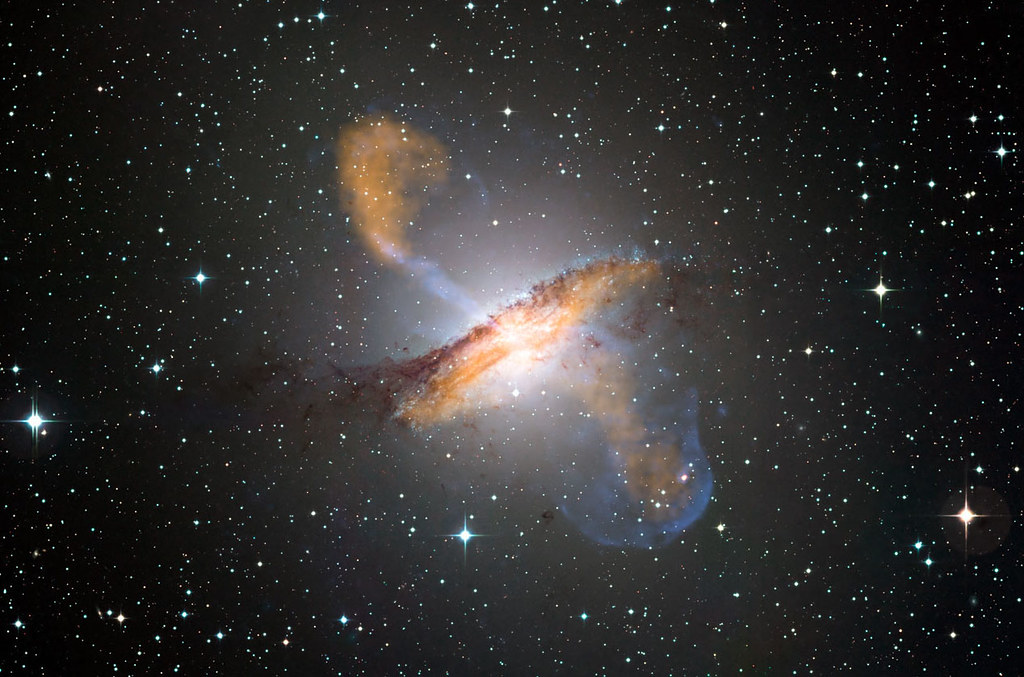
Black hole jet: The surprising danger aimed at Earth

The black hole jet is aimed at us, and it’s in our galaxy. This startling discovery raises questions about the potential impacts on Earth.

What is a black hole jet?

A black hole jet is a powerful stream of particles that is ejected from the region around a black hole, often traveling at nearly the speed of light. These jets are formed when matter, such as gas and dust, falls into the black hole and is accelerated by its intense gravitational pull. The result is a high-energy outflow that can extend thousands of light-years into space.

Typically, black hole jets are found in active galactic nuclei, where supermassive black holes reside. They can emit radiation across the electromagnetic spectrum, from radio waves to gamma rays, making them some of the most energetic phenomena in the universe.

Understanding black hole jets is crucial for astrophysicists, as they can impact surrounding regions, influencing star formation and the evolution of galaxies. Their potential danger to Earth is a topic of ongoing research and concern.

How does it affect Earth?

The existence of a black hole jet in our galaxy raises important questions about its potential effects on Earth. While these jets are incredibly powerful and can extend for thousands of light-years, their impact on our planet is a subject of ongoing research.

Scientists warn that if a black hole jet were to be aimed directly at Earth, it could have devastating consequences. The high-energy particles and radiation emitted from such a jet could disrupt our atmosphere and impact climate patterns.

While the likelihood of a black hole jet directly striking Earth is low, it is not entirely out of the realm of possibility. The following factors contribute to the potential dangers:

  • Distance: The proximity of the black hole to Earth.
  • Intensity: The energy output of the jet.
  • Direction: The alignment of the jet with our planet.

Understanding these dynamics is crucial for assessing future risks.

Recent discoveries about black holes

Recent discoveries about black holes have unveiled fascinating and, at times, alarming information regarding their jets. These jets, which are powerful streams of particles ejected from the regions surrounding black holes, can extend across vast distances, reaching far into space. Scientists have identified that a particular black hole jet is pointed directly at Earth, raising concerns about its potential impact.

Research conducted by astrophysicists has shown that the energy and radiation emitted by these jets could pose risks to our planet. Among the key findings are:

  • Increased radiation exposure: The jets can produce high levels of radiation that may affect Earth’s atmosphere.
  • Disruption of communication systems: The electromagnetic waves from these jets could interfere with satellite communications.
  • Impacts on climate: Intense radiation may influence atmospheric conditions over time.

As studies continue, understanding black hole jets and their implications becomes increasingly vital.

The science behind black hole jets

Black hole jets are powerful streams of charged particles emitted from the regions surrounding supermassive black holes. These jets can travel at nearly the speed of light and are the result of intense magnetic fields generated by the accretion of matter around a black hole. The process involves the conversion of gravitational energy into kinetic energy, which propels particles outward in narrow, focused beams.

Recent studies have shown that our galaxy, the Milky Way, contains a black hole jet that is aimed directly at Earth. This poses potential risks, as the high-energy radiation emitted from these jets could impact our planet’s atmosphere and affect communications and satellite operations.

Understanding the science behind black hole jets is crucial for predicting their effects on Earth and developing strategies to mitigate any potential hazards they may pose.

Future implications for our galaxy

The implications of a black hole jet aimed at Earth extend beyond immediate concerns. As scientists study the dynamics of these powerful jets, several future risks and opportunities emerge for our galaxy. Understanding the behavior of black hole jets can provide insights into the evolution of galaxies and the formation of stars.

Moreover, researchers are investigating the potential effects of a black hole jet’s radiation on nearby celestial bodies. The energy emitted could alter the atmospheres of planets in its path, leading to significant ecological and geological changes.

Additionally, advancements in technology may allow us to better predict the trajectory of such jets, enabling early warnings for potential impacts. As we continue to explore the universe, the study of black hole jets will remain crucial, reminding us of the interconnectedness of cosmic events and their consequences for life on Earth.

By NASA Goddard Photo and Video via Openverse

Where this came from

You might also like

Blazars insights: What are the proven ways to power galaxies?

blazars insights are emerging from new X-ray clues that could revolutionize our understanding of how active galaxies are powered. This discovery opens up exciting avenues for research.

Understanding Blazars

Blazars are a unique type of active galactic nucleus characterized by their powerful jets that emit radiation across the electromagnetic spectrum. These jets are often directed towards Earth, making blazars some of the brightest objects in the universe. Understanding blazars is crucial for gaining insights into the mechanisms that power galaxies.

Recent studies have revealed that blazars are powered by supermassive black holes at their centers. When matter falls into these black holes, it heats up and emits high-energy radiation, which can be detected as X-rays. This process not only sheds light on the nature of blazars but also serves as a window into the dynamics of galaxy formation and evolution.

Key aspects of blazars include:

  • Jets: Highly collimated streams of particles ejected at nearly the speed of light.
  • Variability: Rapid changes in brightness that indicate dynamic processes.
  • Emission spectra: A rich array of wavelengths that provide clues about their environments.

These insights into blazars help astronomers understand not only individual galaxies but also the broader context of cosmic evolution.

The Role of X-Rays in Astronomy

In the study of blazars, X-rays play a crucial role in unlocking the mysteries of how these active galaxies are powered. Researchers have discovered that the emission of X-rays from blazars is primarily due to the interaction of high-energy particles with surrounding material. This process allows astronomers to gain valuable insights into the mechanisms driving galaxy activity.

Recent observations have revealed several key factors regarding X-ray emissions:

  • Particle Acceleration: Blazars exhibit extreme particle acceleration, which results in the production of X-rays that can be detected from vast distances.
  • Black Hole Activity: The X-rays emitted are often linked to the accretion of matter onto supermassive black holes at the center of these galaxies.
  • Jet Formation: The alignment of jets emitted from blazars is crucial, as they can significantly influence the X-ray output and overall energy dynamics.

Thus, understanding X-ray emissions from blazars provides essential insights into the processes that power the most energetic galaxies in the universe.

How Active Galaxies Function

Active galaxies are some of the most energetic and intriguing objects in the universe. At their cores, they host supermassive black holes that can consume vast amounts of surrounding material. This process generates immense energy emissions, particularly in the form of X-rays and gamma rays.

One type of active galaxy, known as a blazar, exhibits unique characteristics that allow astronomers to gain deeper insights into their functioning. Blazars are distinguished by their relativistic jets that are directed towards Earth, producing observable effects across the electromagnetic spectrum. The study of these jets has revealed several key aspects of how active galaxies operate:

  • Accretion Disks: Material spiraling into the black hole forms an accretion disk, generating heat and X-rays.
  • Jet Formation: Magnetic fields play a crucial role in launching jets that emit radiation.
  • Variability: Blazars demonstrate rapid changes in brightness, offering clues about their internal processes.

Through ongoing research, particularly with new X-ray data, scientists hope to uncover more about blazars and their significance in understanding galaxy power mechanisms.

Recent Discoveries in Space

Recent discoveries in the field of astronomy have shed light on the enigmatic nature of blazars, offering valuable insights into how these powerful entities contribute to the energy dynamics of active galaxies. Recent research utilizing advanced X-ray observations has revealed unexpected behaviors in the emissions from blazars.

These findings suggest that the jets of particles emitted by blazars may play a crucial role in the heating of surrounding gas, thereby influencing star formation and the overall evolution of galaxies. Experts are now focusing on:

  • The correlation between blazar emissions and cosmic background radiation
  • New models that explain the magnetic fields around these galaxies
  • Evidence linking blazars to supermassive black holes at their centers

As scientists continue to probe deeper into the mysteries of blazars, these insights may ultimately reshape our understanding of galaxy formation and the mechanisms that power them.

Impact of Blazars on Cosmic Evolution

The study of blazars has revealed significant insights into their impact on cosmic evolution. These highly energetic active galactic nuclei are believed to play a crucial role in shaping the structure and development of galaxies. Observations indicate that blazars influence their surrounding environments through powerful jets that emit radiation across the electromagnetic spectrum.

One of the proven ways blazars impact galaxies is through their interactions with intergalactic matter. As jets from blazars collide with gas and dust, they can trigger star formation or suppress it, altering the galactic ecosystem. Furthermore, the energy released by these jets can heat surrounding gas, preventing it from cooling and forming new stars.

Recent studies suggest that understanding blazars can lead to broader insights about the lifecycle of galaxies and the universe’s expansion. As we explore these cosmic phenomena, the quest for knowledge about blazars continues to illuminate the complex workings of our universe.

The Future of Galaxy Research

The exploration of blazars offers a promising frontier in galaxy research, as scientists continue to uncover new insights into their role in powering galaxies. As observational technology advances, researchers are gaining deeper understanding of these mysterious entities.

One of the most exciting developments is the application of high-energy astrophysics, which allows astronomers to analyze the emissions from blazars more accurately. This provides invaluable data that could lead to breakthroughs in understanding how these powerful sources of energy influence galaxy formation and evolution.

Moreover, collaborative efforts across global observatories are enhancing our ability to gather and analyze vast amounts of data. By sharing resources and findings, scientists are better equipped to unravel the complexities of active galaxies.

  • Innovative observational techniques
  • Interdisciplinary collaboration among researchers
  • Enhanced data collection methods

These advancements could ultimately yield transformative blazars insights that deepen our comprehension of the cosmos.

Challenges in Studying Blazars

The study of blazars presents several challenges that researchers must navigate to gain deeper blazars insights. One significant difficulty lies in their extreme brightness and variability, which can obscure important data. Observing blazars requires advanced telescopes capable of capturing rapid changes in their emissions across various wavelengths.

Additionally, the distance of many blazars complicates measurements. Their light travels billions of years before reaching Earth, making it difficult to determine their true properties and behaviors accurately. This vast distance also means that the effects of cosmic expansion can distort our observations.

Another hurdle is the need for interdisciplinary collaboration. Understanding blazars involves expertise in various fields, including astrophysics, cosmology, and particle physics. Researchers must work together to piece together the complex narratives these cosmic phenomena present.

Despite these challenges, ongoing advancements in technology and methodology continue to enhance our ability to study blazars and unravel their mysteries, ultimately enriching our understanding of the universe.

Recent studies have shed light on how blazars insights can enhance our understanding of galaxy formation. By analyzing the radiation emitted by these powerful objects, researchers are uncovering the mechanisms that drive galactic power.

Read the original

You might also like